Trade is changing. Cash is under pressure. And treasury is right in the middle of it all.
This week I had the pleasure of attending the CEE Trade & Treasury Summit 2026 in Warsaw, organised by Merge Events.
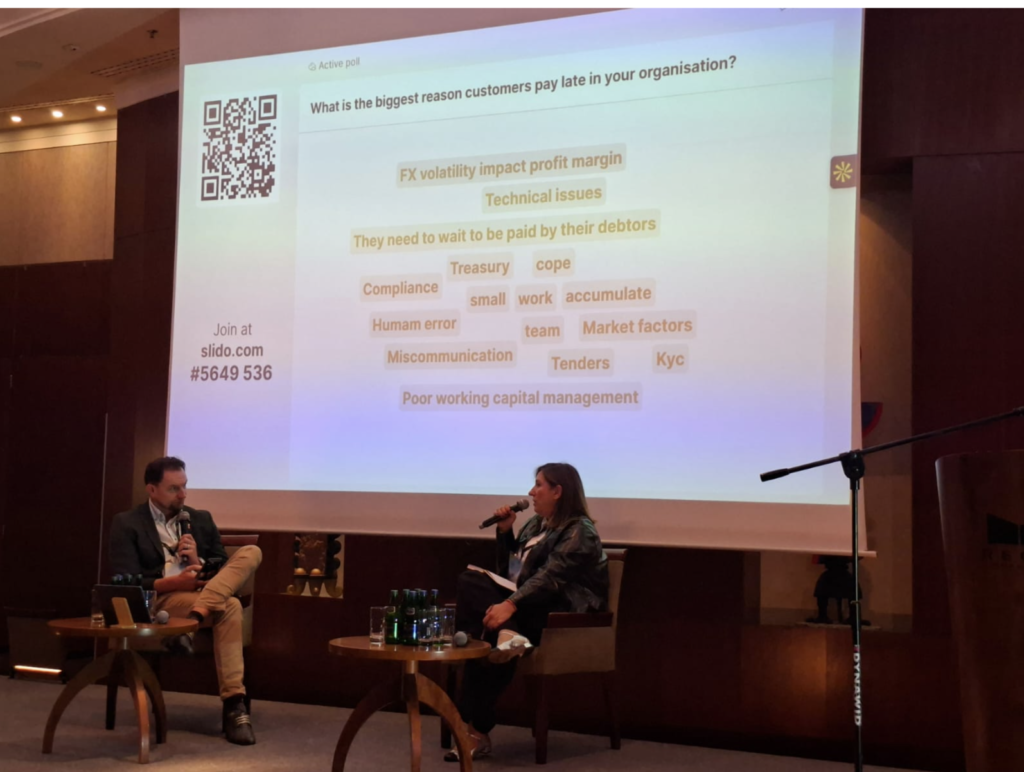
Pecunia Treasury & Finance was present as an exhibitor, and I had the opportunity to moderate a session on one of my favourite treasury topics: working capital and the cash gap.
A good opportunity to meet fellow treasury professionals, exchange ideas and, of course, challenge some of the conventional thinking around treasury.
CEE is becoming increasingly important
One thing that stood out from the agenda was the growing importance of Central and Eastern Europe in international trade, investment and financial flows.
The summit covered a broad range of topics, from changing global trade relationships and commodity flows to construction, energy, industrial investment and the impact of sanctions.
Discussions around EU-India and Mercosur trade relations, Poland-Türkiye cooperation and the changing rules of international trade highlighted just how interconnected trade, financing and risk management have become.
And while trade agreements and investment opportunities tend to make the headlines, someone still needs to manage the cash, currencies, financing and risks behind all those transactions.
That someone is often treasury.
Working capital: Why are we still struggling to get paid?
I had the pleasure of moderating the session:
“The Cash Gap: Why Receivables Are Still Holding Back Working Capital.”
A topic that sounds fairly straightforward but becomes surprisingly complicated once you start digging into it.
After all, companies can report healthy revenues and profits while still struggling with cash flow.
One of the questions we put to the audience was:
“What is the biggest reason customers pay late in your organisation?”
The answers were interesting and quite diverse.
- Customers waiting to be paid by their own debtors
- Technical issues and human errors
- Poor working capital management
- Miscommunication between teams
- Compliance and KYC requirements
- Market factors and FX volatility
What I found particularly interesting was how many of these reasons go beyond the traditional treasury function.
Late payments are not necessarily just a collections problem. They can originate in sales, operations, finance, technology or even the customer’s own working capital challenges.
And this is exactly where treasury has an opportunity to add value.
Working capital is not just about collecting cash faster. It’s about understanding the entire cash conversion cycle and removing the obstacles along the way.
A company can invest heavily in forecasting tools, cash visibility, and sophisticated treasury systems, but if invoices are disputed, processes are broken, or customers cannot pay, the cash still won’t arrive.
Technology can help, but it won’t magically fix poor processes.
From open banking to smarter financing
Another interesting theme on the agenda was the use of open banking data to make smarter financing decisions.
This is a development worth watching.
Traditional financing decisions often rely heavily on historical financial statements, while transaction data can potentially provide a much more current view of a company’s financial position.
For treasury, this raises some interesting possibilities.
Could better access to transaction data improve liquidity forecasting? Could it help companies access financing more efficiently? And could it give lenders a more accurate picture of actual cash generation?
The potential is certainly there.
But as with most treasury technology developments, the real value will depend on how effectively companies turn that data into decisions.
More data is not automatically better treasury.
Global trade is becoming more complicated
Another recurring theme was the increasing complexity of international trade.
Geopolitical developments, sanctions, fragmented markets and changing trade relationships are creating new challenges for companies operating across borders.
For treasury teams, these developments have very practical consequences.
FX exposure, counterparty risk, payment execution, financing availability and liquidity management are all affected.
It also reinforces something I have been saying for years:
Treasury should not simply react to business decisions. Treasury needs to be involved before those decisions are made.
Entering a new market, changing suppliers or expanding internationally might look attractive commercially, but the financial implications need to be understood from day one.
Good conversations at the Pecunia stand
Besides moderating, it was good to represent Pecunia Treasury & Finance at the summit.
Events like these are a reminder of how diverse the treasury profession has become.
Some organisations are still working on the fundamentals: cash visibility, forecasting, banking structures and working capital.
Others are exploring more advanced solutions around automation, treasury technology and data-driven decision-making.
And many are somewhere in between.
What they often have in common is the challenge of finding the right expertise and resources to move forward.
That is exactly where our Pecunia network of 400+ treasury and finance specialists can support organisations, whether through interim support, consultancy or permanent recruitment.
But just as importantly, these events give us the opportunity to listen, exchange experiences and understand what treasury teams are actually dealing with.
My biggest takeaway?
If I had to summarise the summit in one observation, it would be this:
The world of trade is becoming more complex, but the fundamental treasury challenge remains remarkably simple: making sure the right amount of cash is available, in the right currency, at the right place and at the right time.
The difference is that achieving this is becoming increasingly challenging.
Treasury is no longer just about managing bank balances and executing payments. It is about understanding the business, anticipating risks, optimising working capital and supporting strategic decisions.
And that makes treasury a pretty interesting profession to be in.
A big thank you to Merge Events for organising the CEE Trade & Treasury Summit 2026, to the speakers and fellow participants for the discussions, and to everyone who stopped by the Pecunia stand.
Warsaw was definitely worth the trip!
Patrick Kunz
Founder, Pecunia Treasury & Finance
Founder, Treasury Masterminds