Somewhere along the way, this became the default for treasury system implementations. Probably because it looks clean in a proposal and keeps costs nicely under control. One person gets trained, becomes the internal expert, and rolls it out to the rest of the team.
In theory, it sounds efficient. In reality… that’s a bit optimistic.
Let’s be honest about how it actually plays out.
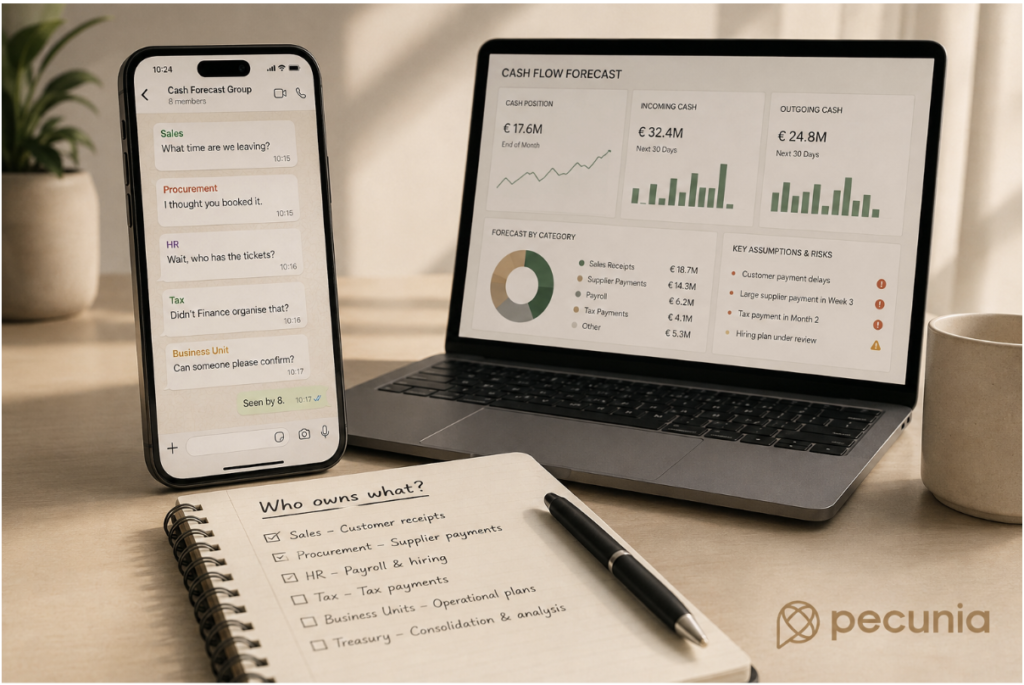
That “key user” is not sitting on the bench waiting for a new hobby. It’s typically your best treasury person. The one who already runs cash, deals with banks, fixes issues, supports the CFO, and somehow keeps everything from falling apart.
And now we expect that same person to learn a full TMS in depth, support the implementation, make design decisions, test everything, and train the rest of the team, all while business as usual keeps going. Sure. Makes perfect sense.
Where it goes wrong
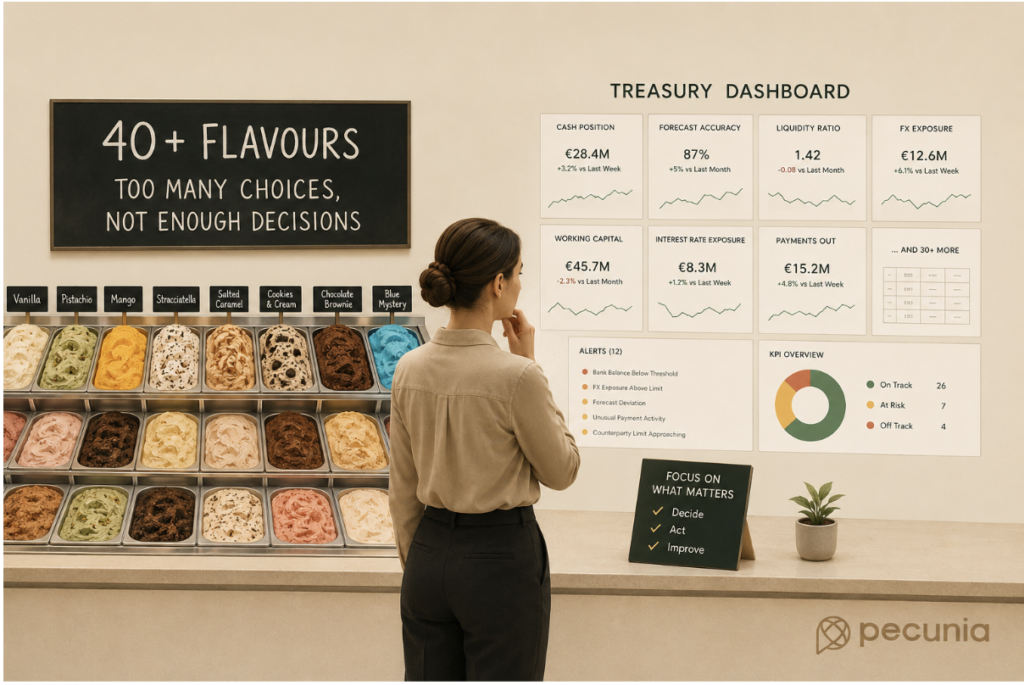
The issue isn’t the model itself; it’s time. If you don’t create real capacity during the implementation, you don’t build real knowledge. What you get instead is surface-level understanding, just enough to go live. And then features remain unused, processes stay suboptimal, Excel quietly creeps back in, and six months later, everyone wonders why the system isn’t delivering what was promised. It’s not the tool, it’s how it was implemented.
When it actually works
Yes, it can work – we’ve seen it, but only when companies treat implementation as a genuine learning phase rather than just a delivery milestone. That means protecting time for the key user, actively involving them in decisions instead of limiting them to training sessions, and giving them the space to understand the “why,” not just the “how.” When this part is rushed, it’s essentially like installing a Ferrari and then driving it permanently in first gear.
What we do differently at Pecunia Treasury & Finance BV
We’ve seen enough implementations to know one thing: capacity beats theory every single time.
So instead of forcing the model to work, we adapt it to reality.
Option 1: Bring in certified TMS expertise
We support your team with people who already know the system. Not just technically, but from a treasury perspective.
Result:
- better design decisions
- faster implementation
- actual knowledge transfer, not just slide decks
Option 2: Free up your own team
This is the one companies underestimate.
We temporarily take over day-to-day treasury operations, so your best people can fully focus on the implementation.
Not half focus, not evenings, not “in between meetings”, but actual focus.
Funny how quality improves when people are allowed to actually do the thing they’re supposed to do.
The uncomfortable truth
Most TMS implementations don’t actually fail; they just underdeliver, and that usually has very little to do with the system or the vendor. More often, it’s because the organization tries to squeeze a transformation project into a team that’s already operating at full capacity.
So what should you do?
It depends on your setup. If your team is already stretched, a train-the-trainer approach on its own won’t be enough, and if the system itself is complex, partial knowledge will come back to hurt you later. If you’re aiming for real ROI, the investment can’t just be in the software; it has to be in time as well. There’s no perfect model, but there is a realistic one.
If you’re in the middle of a TMS implementation, or about to start one, this is exactly where Pecunia Treasury & Finance BV comes in.
We don’t just “support implementations.” We make sure your team actually understands what they’re building.
Treasury, SAP, TMS, Risk, FX, Corporate Finance, AI, Finance. If it touches treasury, we’ve probably seen where it breaks.
And more importantly, how to make it work.